
[ad_1]


In the early 2000s, the mother nature of on the web trade started to shift. Items began to “go viral.”
A single of the most talked about early conditions of this was when then long run BuzzFeed CEO Jonah Peretti, a university child at the time, tried out to place the word “sweatshop” on a customizable pair of Nikes – and the e-mail exchange with the enterprise that resulted went from the hands of a number of of his mates to countless numbers of persons.
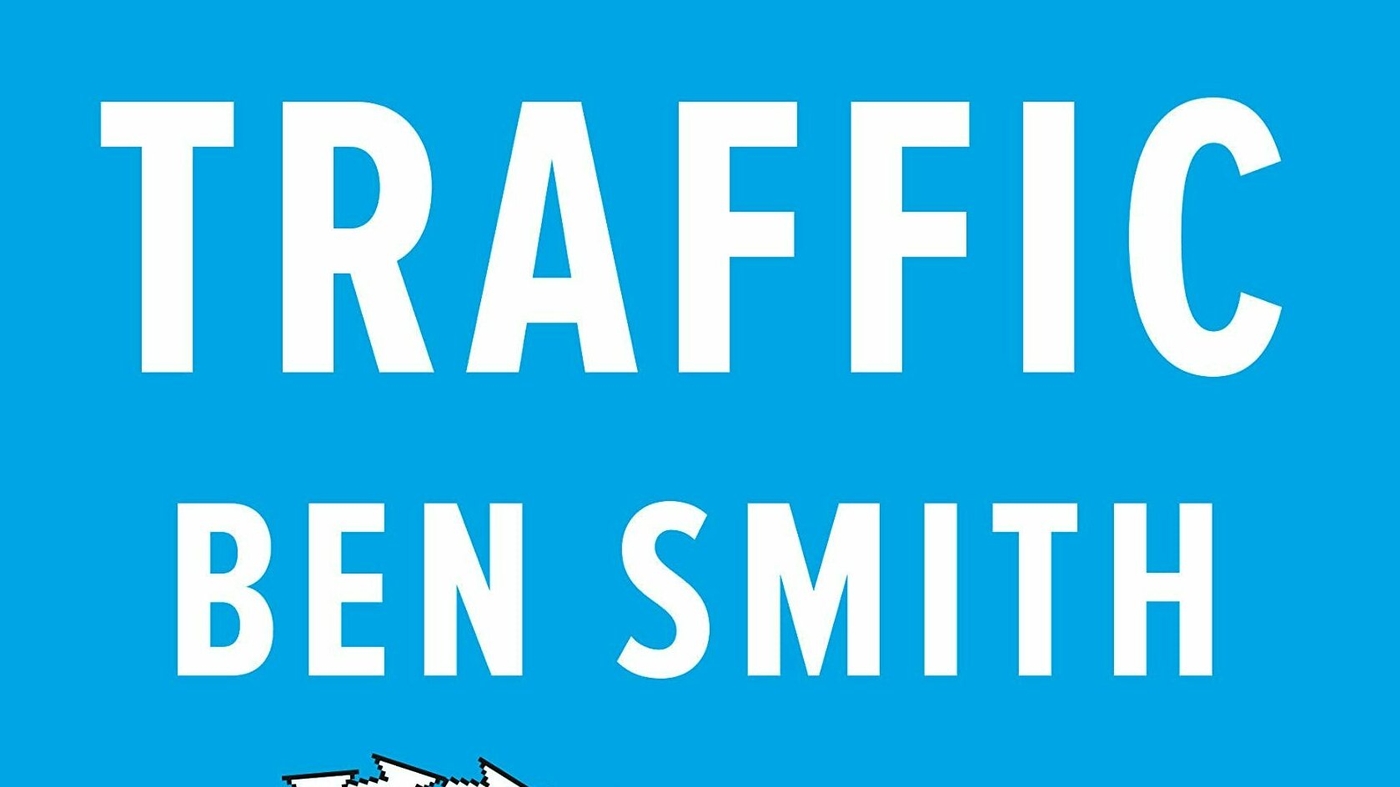
In his new e book Traffic: Genius, Rivalry, and Delusion in the Billion-Greenback Race to Go Viral, Ben Smith, previous editor-in-chief of Buzzfeed Information, lands on his assure to chronicle the increase of electronic media by the tale of a snowballing, head-to-head competition — involving people like Peretti and Nick Denton of Gawker Media, in between the correct and the remaining and, sooner or later, in between the new observed electrical power of social networks and the establishments they assisted build — in an attempt to response the issue: How did we get listed here?
Peretti was ready to replicate the viral character of the Nike exchange, making it into a enterprise. But whilst Peretti managed to wield pockets of command on the world-wide-web, the social forces he helped produce ultimately grew to become also sturdy for any individual to command.
In true BuzzFeed fashion, in this article are five takeaways from Targeted visitors. (Peretti may have gotten a lot of items erroneous, but the accessibility of lists was not just one of them).
1. Conservatism has normally been at the fringes of viral net media.
The very same Huffington Submit that designed an early political guess on Obama was co-started by correct-wing media temperament Andrew Breitbart. Individuals like Breitbart, Steve Bannon, and alt-proper columnist Benny Johnson, as soon as dismissed as slight people, turned key gamers in the rise of electronic media. As Smith writes, when Arianna Huffington was setting up The Huffington Post as a liberal counterpart to The Drudge Report, she preferred to bring on another person who held the essential to the conservative news aggregation website’s booming visitors. There was no one more fitting than Breitbart, who, at the time, was silently operating The Drudge Report. With just one hand in the early beginnings of The Huffington Article and one more in The Drudge Report, Breitbart went on to uncovered conservative website Breitbart Information, which, in the course of its inception, Smith explained as “a type of funhouse mirror to Gawker Media.”
2. The near marriage concerning social media and information is no accident.
These days, it seems intuitive that content articles are shared on social media web-sites like Twitter and Fb, but the principle of a “news feed” has its roots in virality. In its early days, BuzzFeed was involving a material enterprise and a system it was nevertheless unclear how the business could be both editorial and scalable. But seeking at the rise of Fb and Twitter, BuzzFeed understood that these tech corporations would just one day be their source of revenue, similar to how more mature media firms like CNN relied on cable networks to supply channels for them. In 2012, Facebook even available to buy BuzzFeed, but Peretti turned it down. As a substitute, Smith recollects, Peretti proposed the two operate as companions in a variety of thought experiment, with the intent of even more indulging in his obsession with BuzzFeed “taking informational information and packaging it with emotion and wit so it spreads on Fb and other social platforms.”
3. At the main of targeted traffic is id.
In the early days of the web, the elemental unit of targeted visitors could be measured by 1 web site see. But if you wished to evaluate and regulate targeted traffic, you experienced to seem towards human conduct, Smith writes. “Site visitors was human emotion, human psychology, desire and curiosity and humor. It was least complicated to see this kind of sample when you felt like an outsider, an alien.” As social media turned a lot more well known, editors at locations like BuzzFeed and Gawker would have to find out that it, way too, centered close to identities. What was once perceived as a electronic pressure has often been a social one particular the implications of this kind of an observation arrived too little way too late.
4. On the other side of aggressive transparency is dishonesty.
Denton and Gawker had just one eyesight for the potential of media and it was this: revealing the naked truth. No matter if it was a leaked sex-tape, a dick pic, or mining activities purely for articles, if it brought traffic, Denton required it, Smith writes. Such an mindset brought loads of difficulties on to by itself, but maybe a person of its most unintended repercussions was that alongside the way, it produced dishonesty and self-censorship. “If Facebook’s personnel assumed Barack Obama was the culmination of what they’d crafted, it turned out he was just a way station on the road to Donald Trump,” Smith writes. The remaining-winged media’s race for awareness often had the right seeking above its shoulder — and lengthy soon after Gawker shut down in 2016, Smith notes, Denton mirrored, “Transparency has to be coaxed, not forced.”
5. In the conclusion, Facebook dominated.
In 2018, Facebook introduced a improve in its algorithm, marking it as 1 that would focus on “significant social interactions.” In the midst, the system propped up emotional engagement — productively figuring out what men and women were being actually susceptible to sharing and speaking about. “Their algorithm was holding an ever-much more-precise mirror up to Americans’ psyches, and intensifying their strongest reactions,” Smith writes. And as BuzzFeed tried to continue to keep up, Donald Trump and the alt-proper had been way in advance — reworking what was the moment targeted traffic, into actual political electricity.
[ad_2]
Source backlink